Friday, March 19, 2010

Court of Appeal Upholds Ontario "Stunt Driving" Law

We reported last November on decisons by Welland and Belleville courts holding the Province's stunt driving laws unconstitutional. In those rulings, Provincial Court Judges aquitted two Ontario drivers of "stunt driving, or driving in excess of 5o kilometres over a posted speed limit:
In view of the very significant penalties applicable under the section, Mr. Justice West ruled the provision unconstitutional:

[33] It is my opinion that the subject matter of the legislation in issue is undoubtedly speeding, which the Court of Appeal has defined as an absolute liability offence. I am bound by that characterization. Further, it is my view that calling the conduct “stunt” driving does not change its characterization – it is still a speeding offence albeit by a different name. There is nothing about the manner of driving 50 or more kilometres above the speed limit in section 3(7) of the Regulations that elevates or differentiates the conduct from the conduct set out in section 128 (a speeding offence).

[47] However, in my view, the combination of section 172 of the HTA and section 3(7) of O. Reg. 455/07 is only open to one interpretation and having regard to my assessment that the conduct described by section 3(7) is an absolute liability offence, the possibility of the imposition of up to six months imprisonment thereby renders this section unconstitutional.
[53] Consequently, section 3(7) of O. Reg. 455/07 is unconstitutional and is of no force and effect. Applying the doctrine of severance, only that subsection need be severed from the Regulations. The charge against Ms. Drutz is therefore dismissed.
According to a National Post report, the Court of Appeal for Ontario has overruled this decisions. Holding that the legislation is constitutional, the appellate court has upheld the Province's gross speeding or stunt driving law, and ordered retrial on the charges against one of the acquitted drivers:

...The Court of Appeal decision overturned a lower court ruling that said the stunt driving law was unconstitutional, because one could be convicted simply for speeding more than 50 kilometres over the limit. There was no requirement to prove the driving was part of a race or stunt.

The courts have previously interpreted speeding as an "absolute liability" offence, which means someone charged is not allowed to present a defence. The Supreme Court of Canada has ruled an offence cannot include potential jail time as a punishment when there is no right to a defence.

In its decision, the Ontario Court of Appeal stated that aggravated speeding or stunt driving charges must be treated differently from regular speeding.

A defendant charged with stunt driving will be permitted to present a "due diligence" defence to show that reasonable steps were taken to speed by less than 50 kilometres per hour.

"I see nothing illogical in treating one as a strict liability offence and the other as an absolute liability offence," wrote Justice David Doherty, with Justices Robert Blair and Kathryn Feldman concurring.

Section 13

Our friend BCL provides an update on the (lack of) movement to amend the hate speech provisions of Canada's federal and provincial human rights codes.

Thursday, March 18, 2010

The Legal Profession and Stress - A Therapist's View

You're in Trouble, a provocative article by Manhattan therapist (and former lawyer) Will Meyerhofer, examines the underlying causes of anxiety in the legal profession, and reaches a cloudy conclusion:

The cloud hangs over you in the office and follows you home. When you were a kid, it eventually dissipated, but now it lingers indefinitely. What’s really going on?

A little dose of anxiety is being injected into you, in the form of a thought.

Anxiety is triggered by cognition – predictive thoughts. You predict something bad is going to happen, so you clutch up in preparation – tense up and prepare for attack.

At a law firm, the standard predictive cognition – the expectation – is that you are going to be criticized. They do that a lot at law firms. It is a fair guess that if something goes wrong, you are going to be blamed – and things go wrong all the time.

It got to the point for me, at Sullivan & Cromwell, that I felt my entire body clench in preparation for attack just walking through the doors of 125 Broad Street and stepping into that elevator.

When you spend long periods of time tensed up, on alert for attack, it takes a toll on your nervous system. In fact, it can produce lasting damage.

For Mr. Meyerhofer, the difficulties observed among his lawyer-clients have much in common with symptoms more typically seen in cases of post-traumatic stress disorder:

I’ve worked with lawyers who are literally jumpy from the sense of having enemies – hyper-critical, angry attacking partners – spring out at them whenever they let down their guard.

I’ve seen lawyers who have numbed themselves until they barely admit to feeling emotions, even in a therapist’s office.

And yes, lawyers have nightmares about their firms. One former attorney had a recurrent dream in which he realized he was back in his old office. He knew the dream so well he’d start thinking his way out of it right from the start, telling himself it wasn’t like it used to be – that he’d left the firm, they didn’t own him, they couldn’t hurt him anymore, he could get his coat and leave.

Some law firm environments are so punishing and toxic that they produce trauma and trigger PTSD symptoms. At least, that’s what I’ve witnessed over the years from lawyers I’ve seen as clients.

My best advice for anyone working under these conditions is to get some support – and to leave this environment as soon as possible.

This is an important, and too rarely-heard discussion.

The demands of professional practice - and these certainly extend well beyond the critical partners and supervisors Mr. Meyerhofer references - can indeed take a toll on members of the profession. In some circumstances, that toll can become acute.

It is well worth noting that resources and assistance are available for Ontario lawyers experiencing personal and emotional challenges:

The Ontario Lawyers’ Assistance Program (OLAP) is a CONFIDENTIAL provincial program for judges, lawyers, law students and their immediate family members. The services that OLAP provide include professional counseling, peer support, assessment, resource information and referrals to specialized programs and centres. OLAP reflects the commitment and acknowledges the responsibility of the legal profession to assist its members who experience personal or professional distress.

According to its website, OLAP "is funded by LawPRO (Lawyers' Professional Indemnity Company), the Law Society of Upper Canada, and supported by the Ontario Bar Association and by Ontario lawyers. OLAP is a registered charity and operates confidentially and reports to an independent Board of Directors."

Also see ABA Journal: Law Practice Can Trigger Stress Disorder, says Attorney Who Now Works as Therapist

- Garry J. Wise, Toronto

Visit our Toronto Law Firm website: www.wiselaw.net

EMPLOYMENT LAWCIVIL LITIGATIONWILLS AND ESTATESFAMILY LAW & DIVORCE

ORIGINALLY POSTED AT WISE LAW BLOGSUBSCRIBE TO WISE LAW BLOG

Ontario To Announce New Taser Guidelies March 30

Canadian Press reports that the Ontario's government is about to announce new guidelines on the use of Taser stun guns by the Province's police forces:

TORONTO — Ontario is poised to revamp its guidelines on the use of stun guns by police, The Canadian Press has learned.

The changes are expected to be made public March 30, sources say, about two years after the governing Liberals launched a review of Taser use in the province.

According to the report, radical change is unlikely. Recommendations that all front line, uniformed police officers be permitted to carry the weapon are not expected to be implemented:

Currently, only tactical officers and supervisors are allowed to carry Tasers in Ontario, but the government is being urged to make them available to all front-line police officers.

It's among the recommendations made by the police standards advisory committee, a group of representatives from police groups and municipalities within the ministry tasked with providing advice to the government about the use of stun guns.

...Government officials wouldn't comment on whether they plan to follow that advice, but hinted that drastic changes are not in the works.

"We have and will continue -- notwithstanding the report -- to have a very measured use of Tasers in the province of Ontario," said Laura Blondeau, a spokeswoman for Community Safety and Corrections Minister Rick Bartolucci.

Progressive Conservative critic Garfield Dunlop said he's planning to re-introduce a resolution in the legislature demanding that all front-line officers carry Tasers.

Tuesday, March 16, 2010

Jon Stewart On Politics and Pro Wrestling (and Lawyering Too?)

The Daily Show's Jon Stewart enlists pro wrestler Mick Foley to demonstrate the talent and art of arguing both sides of the same issue with equal vigour and zeal.

While the Stewart satire pointedly targets U.S. congressional politicians, perhaps litigation lawyers might also recognize something vaguely familiar in the point being made.

(No we won't, it has nothing to do with practising law).

........

More on this theme today from Norman J. Orenstein's Hypocrisy: A Parliamentary Procedure:
Any veteran observer of Congress is used to the rampant hypocrisy over the use of parliamentary procedures that shifts totally from one side to the other as a majority moves to minority status, and vice versa. But I can’t recall a level of feigned indignation nearly as great as what we are seeing now from congressional Republicans and their acolytes at the Wall Street Journal, and on blogs, talk radio, and cable news. It reached a ridiculous level of misinformation and disinformation over the use of reconciliation, and now threatens to top that level over the projected use of a self-executing rule by House Speaker Nancy Pelosi. In the last Congress that Republicans controlled, from 2005 to 2006, Rules Committee Chairman David Dreier used the self-executing rule more than 35 times, and was no stranger to the concept of “deem and pass.” That strategy, then decried by the House Democrats who are now using it, and now being called unconstitutional by WSJ editorialists, was defended by House Republicans in court (and upheld). Dreier used it for a $40 billion deficit reduction package so that his fellow GOPers could avoid an embarrassing vote on immigration. I don’t like self-executing rules by either party—I prefer the “regular order”—so I am not going to say this is a great idea by the Democrats. But even so—is there no shame anymore?

Sunday, March 14, 2010

Report: Smileys, Frowns Taint Florida Traffic Tickets

According to an investigation by reporter Carmel Cafiero of Fort Lauderdale's WSVN-TV, some Florida police officers scrawl "smileys" and "frowns" on traffic tickets to note their observations on accused drivers' attitudes.

These "doodles" are not disclosed to drivers. They are, however, provided directly to the traffic court magistrates:

Friday, March 12, 2010

Obama Spokesman Loses Bets, Dons Canada Hockey Sweater at White House Briefing

Meet Robert Gibbs, White House Press Secretary:

Feast your eyes, Canada...

The White House spokesman came to his daily on-camera briefing on Friday wearing a red-and-white Canadian hockey jersey — the result of not one, but two losing bets on the U.S.-Canadian rivalry at the recent Winter Olympics.

The first wager was on the women's gold medal game. Canada won.

Then it was the men's contest, and Gibbs went double-or-nothing with Dimitri Soudas, who's the spokesman for Canadian Prime Minister Stephen Harper. Gold again for Canada.

I understand Mr. Gibbs is betting against the public option, too. With his batting average, perhaps there's still hope, yet...

The Reconciliation Option

Ezra Klein makes a strong point:
But the proper way to decide this is with a vote. Sen. Bernard Sanders has promised to bring the public option up in an amendment to the reconciliation package. Good. And if it passes, then Republicans can take a good, long look in the mirror and ask themselves if forcing the Democrats to use a reconciliation strategy rather than compromising to make the bill friendlier to conservative insights was really such a good idea. I don't think it would be the worst thing in the world if relentless obstruction imposed policy costs on Republicans.

Democrats - and the political discourse, generally - have much to gain by telegraphing a simple message on the tenor of negotiations ahead - play nice or pay a price.

- Garry J. Wise, Toronto

Visit our Toronto Law Firm website: www.wiselaw.net

EMPLOYMENT LAWCIVIL LITIGATIONWILLS AND ESTATESFAMILY LAW & DIVORCE

ORIGINALLY POSTED AT WISE LAW BLOGSUBSCRIBE TO WISE LAW BLOG

Quotable - Marshall Jones on Jaffer

Marshall Jones, Managing Editor of Kelowna.com, on prosecutorial power, discretion and accountability in Canada:

What we should be talking about in the Jaffer case and many, many more is the immense power of Crown prosecutors. A hundred cases just like this one goes through our courthouse every day.

Want to know why the original charges were dropped? Too bad. How did they come to the plea bargain? Don’t even ask. Why the lighter charge? Drop dead.

They don’t have to tell you or me anything.

Their power rests in the awful word “discretion.” With every case across their desks—and there are way too many—they have to answer two questions. Is prosecution required in the public interest? And is there a substantial likelihood of conviction?

...Crown prosecutors have a very difficult job balancing those factors as well as many different disciplines and interests: victims, their families, the public, news media, police, justice, the accused, their families all under tight timelines and with huge caseloads.

But I have never seen prosecutors criticized for their decisions. Not by the public, not by judges, not by other prosecutors. They don’t have to defend their decisions to anyone and rarely, if ever, do.

So why did Rahim Jaffer get a lucky break in court? We have to deduce that the investigation had fatal flaws because we all know this was in the public interest. It was an opportunity not only for justice to be done but to be seen to be done, to bastardize the old maxim.

- Garry J. Wise, Toronto

Visit our Toronto Law Firm website: www.wiselaw.net

EMPLOYMENT LAWCIVIL LITIGATIONWILLS AND ESTATESFAMILY LAW & DIVORCE

ORIGINALLY POSTED AT WISE LAW BLOGSUBSCRIBE TO WISE LAW BLOG

Thursday, March 11, 2010

Is Health Care Bill Too Costly?

From The Echo, a student newspaper at Eastern Michigan University:

Make up your own punch lines, ladies and gentlemen...

- Garry J. Wise, Toronto

Visit our Toronto Law Firm website: www.wiselaw.net

EMPLOYMENT LAWCIVIL LITIGATIONWILLS AND ESTATESFAMILY LAW & DIVORCE

ORIGINALLY POSTED AT WISE LAW BLOGSUBSCRIBE TO WISE LAW BLOG

The Jaffer "Wrist Slap"

Was a bungled strip-search at the bottom of the lenient, $500 fine received by the former Conservative MP?

Calgary Herald reports:

Charged with impaired driving, possession of cocaine and speeding, he received what even the judge in the case conceded was a "break" -- a $500 fine for a careless driving plea, with the more serious charges dropped. Jaffer, 38, was pulled over for allegedly driving 43 km/h over the speed limit in Ontario last fall.
...According to reports, the more serious charges against Jaffer were dropped because a rookie police officer failed to follow proper procedures during a strip search of the former politician. Prosecutors apparently felt the evidence would be open to a challenge under the Charter of Rights.

- Garry J. Wise, Toronto

Visit our Toronto Law Firm website: www.wiselaw.net

EMPLOYMENT LAWCIVIL LITIGATIONWILLS AND ESTATESFAMILY LAW & DIVORCE

ORIGINALLY POSTED AT WISE LAW BLOGSUBSCRIBE TO WISE LAW BLOG

Ridiculous Celebrity Lawsuits

Time Magazine offers up another top ten list: Hollywood's Most Outrageous Court Cases

Obama, Roberts and the State of the Union Speech

U.S. Supreme Court Chief Justice John Roberts' ignited considerable controversy Tuesday with his comments on the January 27, 2010 State of the Union speech, in which President Barack Obama was critical of a recent campaign finance ruling by the Court:

U.S. Chief Justice John Roberts said Tuesday the scene at President Barack Obama's first State of the Union address was "very troubling" and that the annual speech to Congress has "degenerated into a political pep rally."

..."To the extent the State of the Union has degenerated into a political pep rally, I'm not sure why we're there," said Roberts, a Republican nominee who joined the court in 2005.

Roberts said anyone is free to criticize the court and that some have an obligation to do so because of their positions.

"So I have no problems with that," he said. "On the other hand, there is the issue of the setting, the circumstances and the decorum. The image of having the members of one branch of government standing up, literally surrounding the Supreme Court, cheering and hollering while the court — according the requirements of protocol — has to sit there expressionless, I think is very troubling."

In a statement sent to reporters, White House Press Secretary Robert Gibbs said that the only troubling thing was the 5-4 ruling by the court, which said that corporations could spend unlimited amounts of money advocating on behalf of candidates in elections. Roberts leads the court.

"What is troubling is that this decision opened the floodgates for corporations and special interests to pour money into elections - drowning out the voices of average Americans," Gibbs said. "The President has long been committed to reducing the undue influence of special interests and their lobbyists over government. That is why he spoke out to condemn the decision and is working with Congress on a legislative response."

Glen Greenwald also weighed in, somewhat emphatically:
Supreme Court Justices, in particular, have awesome, unrestrained power. They are guaranteed life tenure, have no authorities who can sanction them except under the most extreme circumstances, and, with the mere sweep of a pen, can radically alter the lives of huge numbers of people or even transform our political system (as five of them, including Roberts, just did, to some degree, in Citizens United). The very idea that it's terribly wrong, uncouth, and "very troubling" for the President to criticize one of their most significant judicial decisions in a speech while in their majestic presence -- not threaten them, or have them arrested, or incite violence against them, but disagree with their conclusions and call for Congressional remedies (as Art. II, Sec. 3 of the Constitution requires) -- approaches pathological levels of vanity and entitlement. The particular Obama/Roberts/Alito drama is an unimportant distraction, but what this reflects about the mindset of many judges, including (perhaps especially) ones on the Supreme Court and obviously the Chief Justice of that court, is definitely worth considering.

- Garry J. Wise, Toronto

Visit our Toronto Law Firm website: www.wiselaw.net

EMPLOYMENT LAWCIVIL LITIGATIONWILLS AND ESTATESFAMILY LAW & DIVORCE

ORIGINALLY POSTED AT WISE LAW BLOGSUBSCRIBE TO WISE LAW BLOG

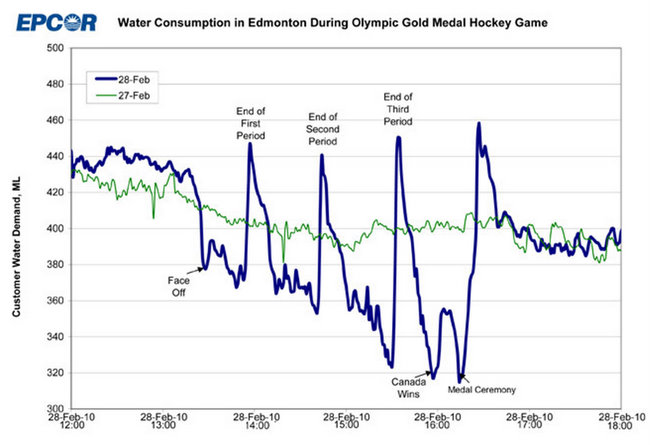
Canadian Water Consumption During Olympic Hockey Final

Another great Canadian tradition in action.

Apparently, we tended to wait - en-masse - for breaks in the action before visiting our restrooms.

Wednesday, March 10, 2010

U.K. Law Firms "Go Public"

Times Online reports:

City law firms are preparing to raise millions of pounds from external investors as the British legal market braces for its own version of Big Bang.

At least 20 firms are planning to raise outside funding under rules that will allow non-lawyers to own a stake in legal practices for the first time, accountants advising the firms told The Times.

Three of these firms are planning to raise a war chest for acquisitions of more than £20 million, either through an initial public offering or from private equity investors.

Under the Legal Services Act, firms will be able to adopt a range of business models in place of their traditional partnership structures. In addition to taking outside capital, they will be allowed to go into business with other professionals and to admit non-lawyers as partners.

Clearly, the line between professional practises and strictly profit-oriented businesses will be blurring with these changes.

Can the legal profession's culture or repute possibly benefit from this, in the long run?

- Garry J. Wise, Toronto

Visit our Toronto Law Firm website: www.wiselaw.net

EMPLOYMENT LAWCIVIL LITIGATIONWILLS AND ESTATESFAMILY LAW & DIVORCE

ORIGINALLY POSTED AT WISE LAW BLOGSUBSCRIBE TO WISE LAW BLOG

Friday, March 05, 2010

Michael Bryant to Appear in Toronto Court Today

Ontario's former Ontario Attorney General, Michael Bryant will appear in a Toronto court today on charges of criminal negligence causing death.

The charges arise from an August 31, 2009 incident in which cyclist Darcy Allen Sheppard, 33, was killed during a traffic altercation with Mr. Bryant.


Mr. Bryant is now a "senior adviser" to Ogilvy Renault, a prominent Toronto law firm.

- Garry J. Wise, Toronto

UPDATE:

From CP:

Lawyers and prosecutors involved in a criminal case against former Ontario attorney general Michael Bryant will appear in a Toronto court today...
...Bryant is not expected to appear, according to his lawyer, Marie Henein, and another court date will be set.

UPDATE II:

The criminal case against Michael Bryant has been adjourned to April 14.

- GJW

Visit our Toronto Law Firm website: www.wiselaw.net

EMPLOYMENT LAWCIVIL LITIGATIONWILLS AND ESTATESFAMILY LAW & DIVORCE

ORIGINALLY POSTED AT WISE LAW BLOGSUBSCRIBE TO WISE LAW BLOG

Child Custody Assessors Seek Protection from Misconduct Complaints

The National Post reports today on lobbying efforts by the Ontario Medical Association to seek legislation protecting child custody assessors from professional conduct complaints by parents who are unhappy with assessment results:

One of the country's largest doctors' groups wants more protection for psychiatrists, psychologists and others whose advice to judges in child-custody cases often leads to unfounded disciplinary complaints from the losing parents.

Charges filed to regulatory bodies by emotionally wrought parents are deterring experts from taking on the important work of custody assessments, some practitioners say.

..."The people who complain have usually lost their children," said Oren Amitay, a Toronto psychologist.

At a meeting last month, the Ontario Medical Association's board of directors instructed the group's staff to work with the Ontario Psychological Association and other groups to lobby for amendments that would protect professionals from "the harm" caused by "frivolous and vexatious" complaints.

Wednesday, March 03, 2010

Ontario Judge Rules for Associates in Messy Law Firm Breakup

In law firms, as in life, breaking up is hard to do.

The ground rules governing the fallout, however, have now been made abundantly more clear.

A strongly-worded ruling by Mr. Justice Edward Belobaba of the Ontario Superior Court of Justice unequivocally articulates the very significant limits on the fiduciary duties that are owed by Ontario's associate lawyers when they leave the law firms that employ them.

In Loreto v. Little et al, a decision released February 21, 2010, Mr. Justice Belobaba dismissed a suit by a senior Toronto practitioner against four former employee-associates of his personal injury law firm.

In the suit, the employer alleged that the departing associates breached their fiduciary duties to the firm after they opened a competing law firm and utilized their former firm's client lists to solicit the clients for whom they acted before their departure.

Justice Belobaba resoundingly disagreed with the employer.

The lawsuit ultimately boils down to a dispute over fees and ownership of client files in the context of a law firm that dissolved over partnership negotiations gone very sour.

While Justice Belobaba's ruling is not lacking in the predictably animated details of the firm's messy breakup, it more importantly addresses key issues of concern to lawyers and clients alike in these regrettably common circumstances.

Constructive Dismissal

Interestingly, the Court held that the sheer velocity of the firm principal's highly vocal obection to the terms of a partnership agreement proposed by the four associates in and of itself created so poisoned an environment that continuation of two associates' employment was rendered untenable.

Thus, they were constructively dismissed.

Mr. Justice Belobaba noted:

[25] This is not a case where the employer was being critical of the four lawyers’ unsatisfactory performance – indeed Frank had been so pleased with their work and the financial contribution they were making to the firm that he had just offered them a partnership and had asked Ian to prepare a draft of the agreement. This is a case where the employer became irrationally defensive and paranoid and uncontrollably angry. This is a case where the employer decided to throw a temper tantrum for no apparent reason.

[26] But even so, not every workplace blow-up automatically results in a poisoning of the working environment or in the constructive dismissal of the targeted employees. Cooler heads prevail, apologies are made and accepted and the workplace returns to normal. Here, however, in my view, Ian and Dianna had good reason to conclude that Frank had crossed a line and they could not reasonably return to work with him at the LLM law firm. If they did, the office environment would be intolerable

Mr. Justice Belobaba ruled that the employment of the two remaining Defendant associates had actually been terminated in the verbal flare-up that followed presentation of the proposed agreement.

Fiduciary Duty of Law Firm Associates

The Court underlined that the interests of clients are paramount when a law firm dissolves.

Clients have an absolute right to choose who will subsequently represent them.

Thus the duties of lawyers and other professionals who leave employment are quite different from those of employees who leave positions in most other fields and industries:

[28] Departing employees, as a general rule, have certain obligations when they leave their employer. At the very least, in the absence of any restrictive contractual provisions, the departing employee has an implied duty of fidelity. She can set up shop in competition with her former employer; she can even contact customers or clients using a public telephone directory, but she cannot take and use customer lists to make these calls.[6]
[29] Where the departing employee is a fiduciary, the rules became more restrictive. He cannot compete with his former employer or solicit clients for at least a reasonable period of time. And he certainly cannot use customer lists belonging to the employer to contact clients and solicit business.In cases involving lawyers or doctors or other professionals, however, these general rules do not apply. A different approach is taken primarily because of the personal nature of professional services and the client’s right to choose.

Confidentiality

Similarly, the Court held that the ordinary restrictions on use by former employees of client lists to solicit the former employer's customers do not apply to lawyers, doctors and other professionals who work on a close, personal basis with their clients:

[38] Nor was there any breach of any duty of confidentiality. The plaintiff argues that the defendants’ use of the firm’s client list was a breach of their duty of confidentiality. It is true that in many situations, taking and using a firm’s client list, even if the list is limited to “one’s own” clients can amount to a breach of confidentiality.

[39] The law takes a different approach, however, in the case of professionals such as doctors, lawyers or dentists. A departing lawyer or other professional is permitted to take, even to download, a list of the clients he has personally worked with in order to contact them and offer them the three choices [regarding representation] discussed above.

The Retainer Agreement Prevails

In the inevitable dispute over division of legal fees arising in connection with the disputed client files, most of which were governed by contingency fee agreements, the court ruled that the firm's retainer agreement prevailed.

These agreements provided that if the firm's retainer was terminated prior to completion of a matter, the firm's fees would be wholly based on the hourly rates applicable for the time spent by the lawyers engaged in the matter, prior to the termination of the retainer. Thus, the court ruled:

[41] A brief comment about Frank’s right to be compensated for the 200 plus files that his former clients have transferred to LMVS. This is a matter that is governed by the terms of the retainer agreement. The disbursements have now been paid in full. All that remains is to estimate the time that was spent on each file before it was transferred and submit the appropriate account. One of the problems for Frank, a problem of his own creation, is that the personal injury lawyers were not required to docket their time and keep track of their hours – they were only to focus on getting a recovery and then billing the contingency fee.

It should be noted that no employment agreement governed the parties in Loretto; this may well have been a significant factor in the outcome.

Read the complete ruling: Loreto v. Little et al, 2010 ONSC 755 (CanLII)

- Garry J. Wise, Toronto

Visit our Toronto Law Firm website: www.wiselaw.net

EMPLOYMENT LAWCIVIL LITIGATIONWILLS AND ESTATESFAMILY LAW & DIVORCE

ORIGINALLY POSTED AT WISE LAW BLOGSUBSCRIBE TO WISE LAW BLOG

Tuesday, March 02, 2010

Blaming Lawyers for Representing Their Clients

Yet another low point in yellow conservatism - "The Al Qaeda Seven."


According to Orin Kerr at Volokh (who rather agrees with the sentiment expressed, apparently), this one has Liz Cheney's fingerprints all over it.

For more on this "smear campaign," see TPM.

- Garry J. Wise, Toronto

Visit our Toronto Law Firm website: www.wiselaw.net

EMPLOYMENT LAWCIVIL LITIGATIONWILLS AND ESTATESFAMILY LAW & DIVORCE

ORIGINALLY POSTED AT WISE LAW BLOGSUBSCRIBE TO WISE LAW BLOG

Articling Position Available - Wise Law Office, Toronto

Wise Law Office invites applications for an articling position with our firm for the coming year. The position is available commencing on or after April 21, 2010.

We ask that interested applicants forward resumes by email to me no later than April 21, 2010.

- Garry J. Wise, Toronto

Visit our Toronto Law Firm website: www.wiselaw.net

EMPLOYMENT LAWCIVIL LITIGATIONWILLS AND ESTATESFAMILY LAW & DIVORCE

ORIGINALLY POSTED AT WISE LAW BLOGSUBSCRIBE TO WISE LAW BLOG

Monday, March 01, 2010

Re: Hockey Celebrations at Dundas Square, Toronto

Memo to Phil Kessel, Dion Phaneuf, Luke Schenn, Nazem Kadri et al.:

See the video below:


I understand it won't be this year, but we'd like to do this again soon, please.

Yours very truly,


Sunday, February 28, 2010

Canada Wins Olympic Hockey Gold!!!

Team Canada has just captured Olympic hockey gold, with a stunning 3-2 overtime win over Ryan Miller and his never-say-die American team.

Sidney Crosby scored the winning goal for Canada at 7:40 of the gold medal game's overtime period.

The gutsy Americans battled back from a 2-0 deficit, forcing overtime with a Zach Parise goal that tied the game with only 24 seconds to go in the third period.

The American team wins silver medals with the loss.

But Canada gets gold - and the last laugh, this time around.

Simply awsome!